As the hills start to turn from that beautiful vibrant green to the familiar summer gold, we all feel that collective tightening in our chests. We live in a beautiful part of the world, but we also live with the reality of wildfire season. We've all been doing the hard work: clearing the brush, cleaning the gutters, and following the MOFD primers on home hardening.
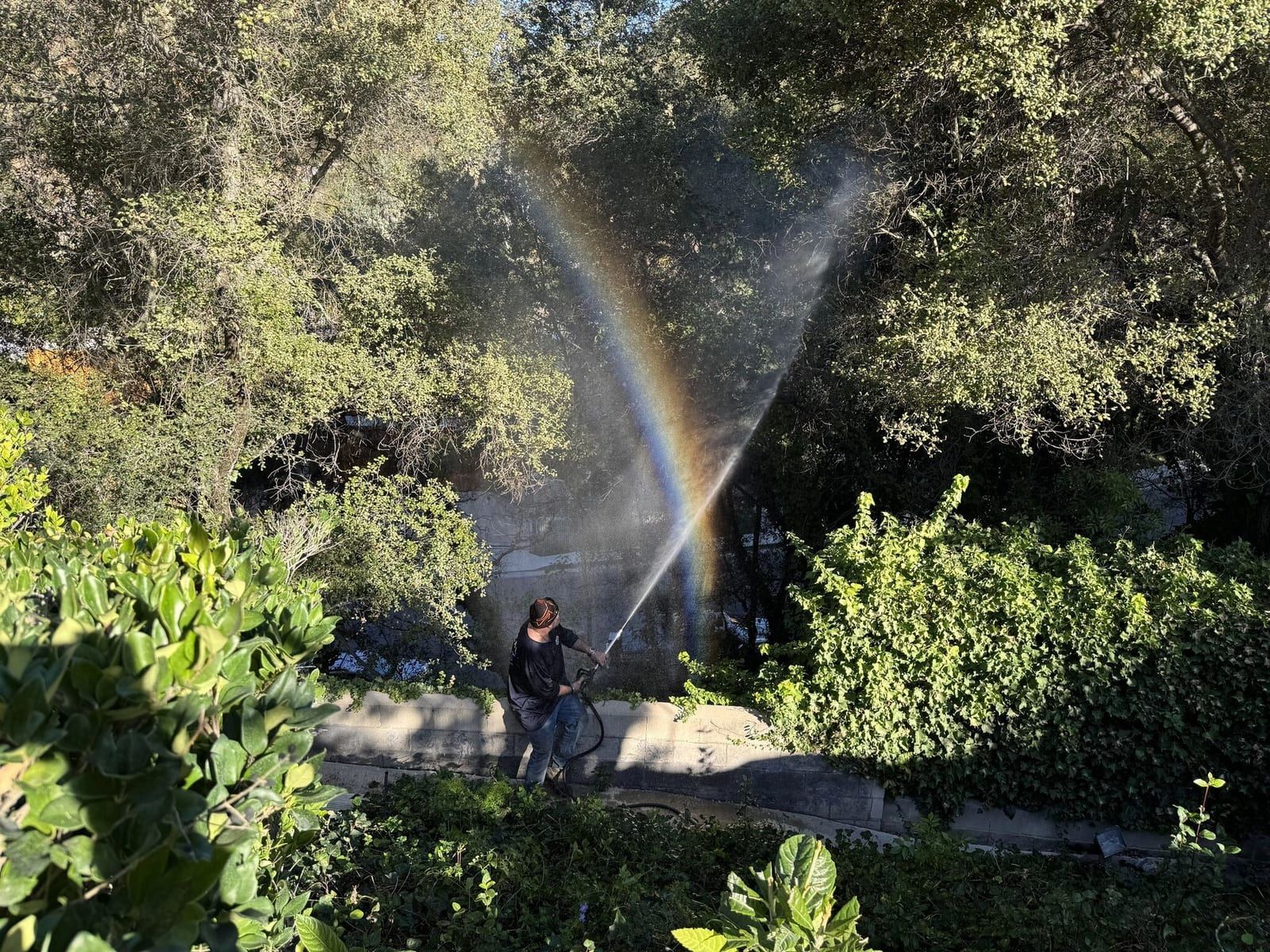
Lately, we've been looking for "one more layer" of protection, something that could buy us critical time or stop a small ember from becoming a disaster. One product worth a closer look is Clore Wildfire Defense, a long-term retardant developed by a Bay Area startup.
What is Clore Wildfire Defense?
Clore is a long-term fire retardant spray designed for areas prone to ignition. You apply it to grass, brush, wooden fences, and other cellulose materials around your property, and it provides ignition resistance to the treated area. According to Clore, the product is made from salts and fertilizers (the full formula is a trade secret), and it creates a barrier that makes treated vegetation and wood materials less likely to catch fire.
The key word there is long-term. You can apply it well before fire season starts, or anytime during the season. Once applied, it dries clear -- Clore says that if applied according to their instructions, you won't be able to tell the treated area looks any different.
How Does It Work? (The Dry Advantage)
This is where Clore stands apart from the fire-protection products most of us have heard about. Traditional fire foams and gels work by keeping surfaces wet. They create a moisture barrier between the material and the flame. That means they need to be applied right before a fire threatens, and they stop working once they dry out -- usually within hours.
Clore works differently. It's designed to protect when dry. You spray it, it dries, and the protection stays in place. The treated materials themselves become resistant to ignition. In their test gallery, Clore shows treated and untreated dry grass side by side: the untreated grass burns completely, while the treated section won't ignite. They've run the same test on paper strips (flame extinguishes instantly at the treated line), pine needles (tested after a 12-hour drying period), and wooden boards (over a minute of direct flame exposure with treated boards resisting burn-through and holding their structure).
That's a meaningful difference for us in Lamorinda. We're not going to be out there spraying foam on our hillsides while smoke is on the horizon. But we can spray Clore on the dry grass and brush behind our homes weeks or months ahead of time and know the protection is in place.
How Is It Different from Other Products?
Here's a quick comparison:
- Short-term foams and gels (like Phos-Chek home defense or Barricade gel): Applied hours before a fire arrives. Must stay wet to work. Protection fades as they dry, typically within hours. Useful for last-minute preparation when an evacuation warning hits.
- Aerial retardant drops (the red Phos-Chek you see from aircraft): Applied by firefighting agencies during active fires. Not available for homeowner use. Washes away with rain.
- Clore Wildfire Defense: Applied anytime -- weeks or months in advance. Works dry. Stays effective until heavy rainfall (more than 2 inches) degrades it. Reapply once a year or after major storms.
What About Toxicity?
This matters a lot for those of us with kids, dogs, gardens, and the creek running through our backyards. Clore had their product tested by StillMeadow, Inc., an independent laboratory. The result: no clinical signs of acute oral toxicity, with an LD50 greater than 5,000 mg/kg. That places Clore in EPA Category IV, which is the lowest hazard category.
To put that in context: common table salt has an LD50 of roughly 3,000 mg/kg. By that standard toxicological measure, Clore is less acutely toxic than the salt on your dinner table. Clore says the product is non-toxic to plants, humans, and the environment, and safe for use around animals (though they advise against letting animals consume it directly). Their fabric retardant product also holds a California Fire Marshal License (C-027583).
Application Basics
- How to apply: Use a standard garden sprayer. Evenly coat the area you want to protect. Clore includes a sprayer in their starter kits.
- Coverage: One gallon covers roughly 200 square feet. Five gallons covers about 1,000 square feet.
- Time: About 5 minutes per gallon to apply.
- When to apply: Anytime. Before fire season, during fire season, or whenever you want the protection in place. No need to wait for an imminent threat.
- How long it lasts: Reapply once a year, or after heavy rain or weather events that exceed about 2 inches of rainfall.
- What surfaces: Grass, brush, bushes, wooden fences, and other cellulose materials. Also compatible with wooden structures, but Clore recommends testing a small area first on any finished surfaces.
- Appearance: Dries clear. No visible residue when applied correctly.
Our Take
We want to be straight with you: no spray replaces defensible space work. A clean roof, cleared gutters, and proper vegetation management are still the foundation. Clore itself says their product "is not a substitute for proper fire safety measures." We agree completely.
But for those of us with properties that back up against steep, grassy open space -- and that's a lot of us in Lafayette, Moraga, and Orinda -- there are patches of vegetation you can't fully clear. There are wooden fences that border wild grass. There are spots where embers could land and catch. For those areas, having a proven ignition-resistance treatment that you can apply once and forget about for the season feels like a smart additional layer.
Clore is a young company, and we'll be watching how the product performs over time and across more real-world conditions. What we can say right now is that their testing is credible (third-party lab, live field demos), their safety profile is strong (EPA Category IV, less acutely toxic than table salt), and the concept of a dry, long-term retardant fills a gap that foams and gels don't cover.
Neighborly Advice
Specific hardening requirements vary by jurisdiction and property. Check with your local fire district for guidance tailored to your home.
Call to Action
If you are interested in adding another layer to your home defense, take a look at their details at clorefr.com. They have a network of application partners across California, including Blue Halo Fire Defense, Blaze Busters, Matador Fire, and others listed on their site. It might be worth a neighborhood chat to see if we can coordinate some applications or just share tips on what we are finding.
If you do reach out, let them know you heard about them from Lamorinda Ready!
Let's keep our community safe and resilient this year.
Your next step: Clore spray is one piece of a broader hardening strategy. See where it fits in the full picture.
- Applying Fire-Retardant Coatings to Exposed Wood, the complete guide to fire-retardant products, application, and maintenance
- The Big Three: Roof, Vents, Defensible Space, the three measures that form the foundation of home fire resilience
- Home Hardening Checklist, a prioritized list of every hardening measure for your home