The Headline, Read Carefully
In October 2025, the Contra Costa County Fire Protection District (ConFire) earned an upgraded ISO Class 2 rating across its entire service area, a district-wide improvement from the prior split ratings of Class 3/8B in the Western and Central regions and Class 4/9 in the Eastern region. ConFire's Fire Suppression Rating Schedule score rose from approximately 75 to 87.4 out of 105.5, landing just three points shy of the top Class 1 designation (ConFire announcement).
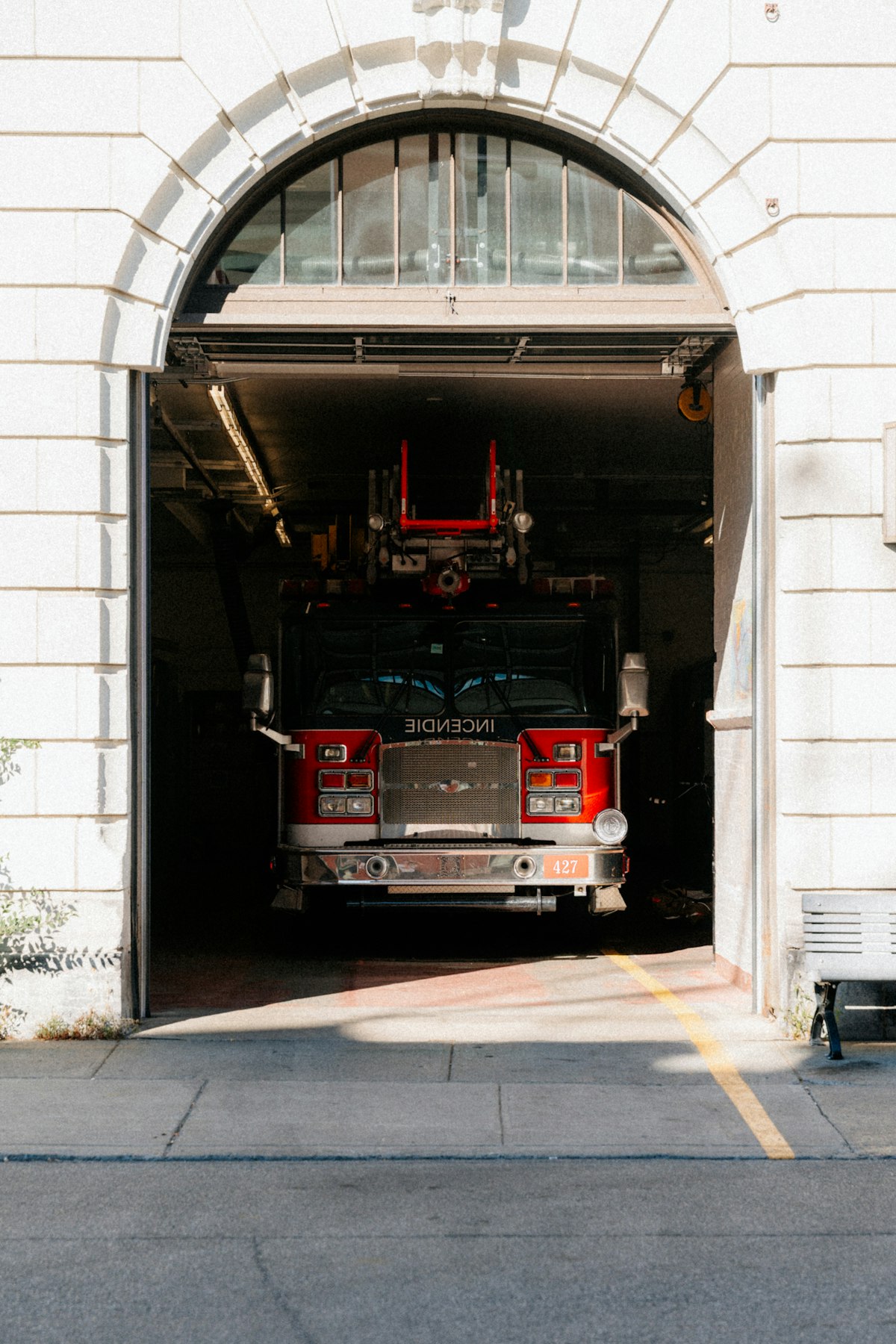
This is a legitimate public-safety milestone, earned over roughly eighteen years of sustained investment by the district. It deserves recognition.
It is also more complicated than the press release suggests, especially on the question of insurance. Before you call your broker, read on.
Who This Applies To (and Who It Doesn't)
ConFire serves roughly one million residents across a 582-square-mile service area stretching from Discovery Bay and Bethel Island in the east to Hercules and Pinole in the west. Its service area includes the cities of Antioch, Clayton, Concord, Lafayette, Martinez, Pittsburg, San Pablo, Walnut Creek, and numerous unincorporated communities (Contra Costa LAFCo Fire Protection Districts directory).
Moraga and Orinda are not served by ConFire. They are served by the Moraga-Orinda Fire District (MOFD), a separate special district with its own staff, stations, and ISO rating. MOFD's ISO classification is not covered by the October 2025 ConFire announcement.
So of the three Lamorinda cities, only Lafayette is directly affected by ConFire's rating change. If you live in Moraga or Orinda, your structural fire protection is rated separately, by MOFD, and that rating is not what this announcement is about.
What an ISO Rating Actually Measures
The Insurance Services Office (ISO), a subsidiary of Verisk Analytics, runs the Public Protection Classification (PPC) program, which evaluates more than 40,000 fire jurisdictions nationwide and assigns each one a class from 1 (superior) to 10 (no recognized fire protection). Ratings are determined through a 105.5-point Fire Suppression Rating Schedule (FSRS) that measures four categories:
- Emergency Communications (10 points): How quickly 911 calls are answered and dispatched.
- Fire Department Operations (50 points): Staffing, training, equipment, response times, and apparatus deployment.
- Water Supply (40 points): Hydrant distribution, flow capacity, and reliability.
- Community Risk Reduction (5.5 points): Fire-prevention code enforcement, public safety education, and fire-investigation programs.
ConFire's 87.4-point score maps to Class 2. The class breakdown: Class 1 is 90-105.5 points (the top tier, held by a small fraction of U.S. jurisdictions); Class 2 is 80-89.99 points; Class 3 is 70-79.99; and each successive class represents a ten-point band downward (ISO Mitigation, How the PPC Program Works).
The split-class notation you may see (Class 2/2Y) reflects properties within five road miles of a responding fire station and within 1,000 feet of a creditable water supply (the first number), versus properties within five road miles of a station but without creditable hydrant access (the second, with "Y" denoting alternative water source credit). ConFire's prior split ratings of Class 3/8B and Class 4/9 reflected a similar distinction, with the second number applying to properties outside standard hydrant reach.
What ConFire Actually Did to Earn It
The press release credits "years of strategic investment in facilities, staffing, training, prevention, and emergency response capabilities." The announcement of Fire Chief Lewis Broschard's retirement, effective March 30, 2026 after more than 18 years with the district, provides a more specific inventory of the changes made during the relevant period:
- Annexation of East Contra Costa Fire Protection District and Rodeo-Hercules Fire Protection District into ConFire, and a contract for service with the City of Pinole. These unified previously fragmented fire protection under a single, larger district with pooled resources and uniform standards.
- Establishment of a firefighting hand crew program and the launch of a seasonal aerial firefighting helicopter program (Copter 1), a Type 2 aircraft carrying 300 gallons of water and equipped with a snorkel and pump for open-water refill, stationed at the Byron Wildfire Center and available daily during daylight hours of the summer fire season (ConFire, Seasonal Aerial Firefighting Helicopter Now in Service).
- An apparatus replacement program and the rebuilding of several fire stations.
- Expansion and modernization of the regional fire dispatch center, with increased 911 dispatcher staffing.
- Increased staffing in operations and fire prevention, along with strengthened and expanded emergency ambulance operations.
- Wildfire mitigation projects funded and completed across the county, and support for more than 40 new Firewise communities formed within the district.
The Copter 1 program alone operates on a $2 million annual budget, with $1 million provided through a partnership with PG&E and the balance from ConFire's general fund.
These are not token investments. They represent sustained, multi-year organizational and operational work, the kind of investment that a fire district only realizes in its ISO score after many cycles of review.
Where the Changes Were Most Dramatic
The biggest rating jumps in the October 2025 upgrade happened in East County, which had historically carried the weakest classifications.
- Bethel Island improved from Class 9 to Class 2Y: a seven-class jump that reflects both the East County annexations and the build-out of new station capacity.
- Brentwood and Oakley advanced from Class 4 to Class 2.
For the Central region, which includes Lafayette, the change was a two-class improvement, from Class 3 (with a split-class 8B for properties without creditable water supply) to a unified Class 2/2Y. It is a real improvement, but a smaller-magnitude one than East County experienced. Central-region residents were already being served at a level that most of the country would consider good.
The Insurance Question: An Honest Assessment
The ConFire announcement states that the upgraded rating "can result in lower fire insurance costs while providing reassurance of high-quality emergency services." The word that carries the weight here is can.
Residential: Probably Not a Rate Cut
Industry guidance on ISO-driven residential insurance pricing has long held that homeowners' rates generally do not decrease below Class 5. As the ISO class improves from 10 down toward 5, residential fire-insurance rates step down. From Class 5 to Class 1, they typically flatten (ISO Rating Impact on Insurance Premiums, Union VFD summary; ISO Ratings by Insurance Companies, California Fire Districts Association).
This is a general industry convention, not a universal rule. Some carriers do price residential policies with finer gradations below Class 5; most do not. For Lafayette homeowners who were already being served at ConFire's prior Class 3 rating, the move to Class 2 is unlikely to produce an automatic homeowners premium reduction on the structural fire portion of the policy. The change is real, the public-safety benefit is real, but the residential insurance benefit may be absent.
Commercial and Business: Yes, More Likely
Commercial property insurance is where ISO class distinctions continue to matter across the full rating scale. Businesses, multi-family residential buildings, and larger commercial structures in ConFire's service area, particularly those in East County communities that saw the largest class jumps, are more likely to see measurable premium changes at their next renewal (CAFDA, ISO Ratings by Insurance Companies).
And California's Actual Insurance Crisis
Here is where the context matters most for Lamorinda.
The insurance crisis facing Lafayette, Moraga, and Orinda homeowners today is not a crisis of fire-department response quality. It is a wildfire-exposure crisis, driven by property-level risk attributes (proximity to Wildland-Urban Interface, slope, vegetation, access, construction) and carrier decisions to stop writing new business in high-risk zones or to non-renew existing policies.
In Orinda alone, State Farm non-renewed 1,703 of 3,115 policies, 55% of its book in a single ZIP code, the highest rate in California. In Lafayette, 956 State Farm policies were non-renewed. Those non-renewals were driven by the carrier's assessment of wildfire exposure at the parcel level, not by the district's ISO PPC classification. An ISO upgrade from Class 3 to Class 2 does not change a property's distance to the WUI, its vegetation profile, or its historical loss exposure. It does not automatically cause a non-renewed policy to be restored, nor does it move a property out of the California FAIR Plan and back into the admitted market.
For the fuller picture of what Lamorinda families are actually facing with insurance, see our companion piece: The Insurance Crisis Hitting Lamorinda.
What It Does Change
ISO rating improvements matter most in three ways that aren't about this year's premium:
- Public safety on the ground. A Class 2 district responds faster, dispatches more reliably, carries more capable apparatus, and reaches fires earlier. Those differences show up in lives saved and structures preserved, not on renewal notices. Copter 1 putting 300 gallons of water on an incipient fire in the first ten minutes is a meaningful operational improvement regardless of what it does to your premium.
- Long-horizon insurability. As the California market stabilizes and carriers begin to write again, districts with strong ISO ratings and high Firewise-community counts will be the ones insurers return to first. Resilience at the district level is one of the inputs that shapes which communities stay insurable over decades.
- Commercial underwriting. Businesses, mixed-use buildings, and multi-family properties in Lafayette and across ConFire's service area should ask their brokers specifically whether the new Class 2 rating applies to their policy at renewal. For many commercial lines, it will.
What It Doesn't Change
- If your homeowner's policy was non-renewed for wildfire exposure, the ISO upgrade will not, by itself, restore coverage.
- If you're on the California FAIR Plan, the ISO upgrade does not move you back to the admitted market. FAIR Plan eligibility and pricing are driven by admitted-market availability for your property, not district ISO.
- Your individual home's vulnerability to ember ignition is not materially changed by a better-rated fire department arriving one minute sooner. In a wind-driven ember storm, structure-to-structure ignition is measured in seconds; what you did to your own five-foot perimeter matters more than the responding unit's ETA.
The Takeaway
ConFire's Class 2 rating is real, earned, and worth celebrating. It reflects eighteen years of district-level work that improves the odds for every property within ConFire's service area, including Lafayette.
It is not a substitute for home hardening. It is not a reversal of the State Farm non-renewals. It is not a bridge back to affordable coverage for Orinda or Moraga, which aren't in ConFire's service area at all.
The honest framing is this: the district did its job, at scale, over a long time horizon. Now the work that matters most is what happens at your address. Specific hardening requirements vary by jurisdiction and property. Check with your local fire district for guidance tailored to your home.
Next Steps
- Lafayette homeowners: Ask your insurance broker at next renewal whether the Class 2 rating appears in your carrier's pricing. Rates, discounts, and eligibility criteria change over time, so verify current details with your insurer. For some carriers it may appear, for most residential policies it won't.
- Moraga / Orinda homeowners: Your fire protection is MOFD, not ConFire. MOFD's ISO rating is a separate matter. If you want to dig in, a good next read is the MOFD news and recent events feed.
- All Lamorinda homeowners: If you haven't taken it yet, your highest-leverage next step is assessing your own home's vulnerabilities. Take the Home Resilience assessment.
Sources cited in this article:
- ConFire press release, "Achieves Improved Insurance Services Office Class 2 Rating," October 14, 2025, link
- ConFire press release, "Seasonal Aerial Firefighting Helicopter Now in Service", link
- ConFire press release, "Fire Chief Lewis Broschard Announces Retirement," January 28, 2026, link
- ISO Mitigation, "How the PPC Program Works", link
- Contra Costa LAFCo, Fire Protection Districts directory, link
- Union VFD summary of ISO Insurance Impacts, link
- CAFDA, ISO Ratings by Insurance Companies, link